中文简体
中文简体
 English
 русский

Quick Product Search
Contact us to learn how we can use our expertise to bring you high-quality products.
2026-05-29
Let me start with the most common source of confusion.
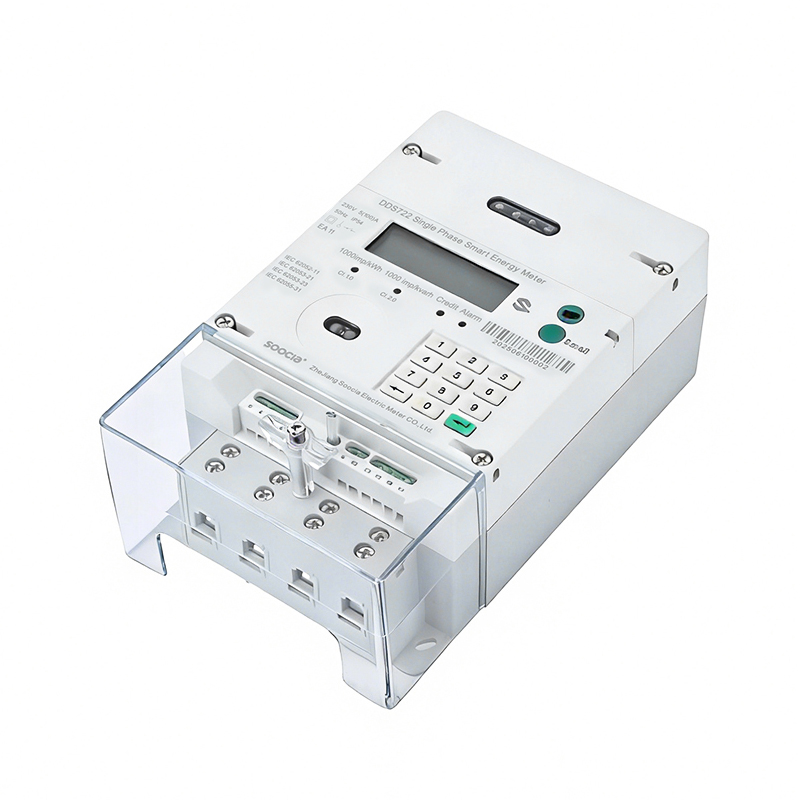
An STS smart meter is not a specific brand or a particular type of hardware. It's a meter that complies with the Standard Transfer Specification—an open international standard for prepayment metering that was first developed in South Africa in the early 1990s.
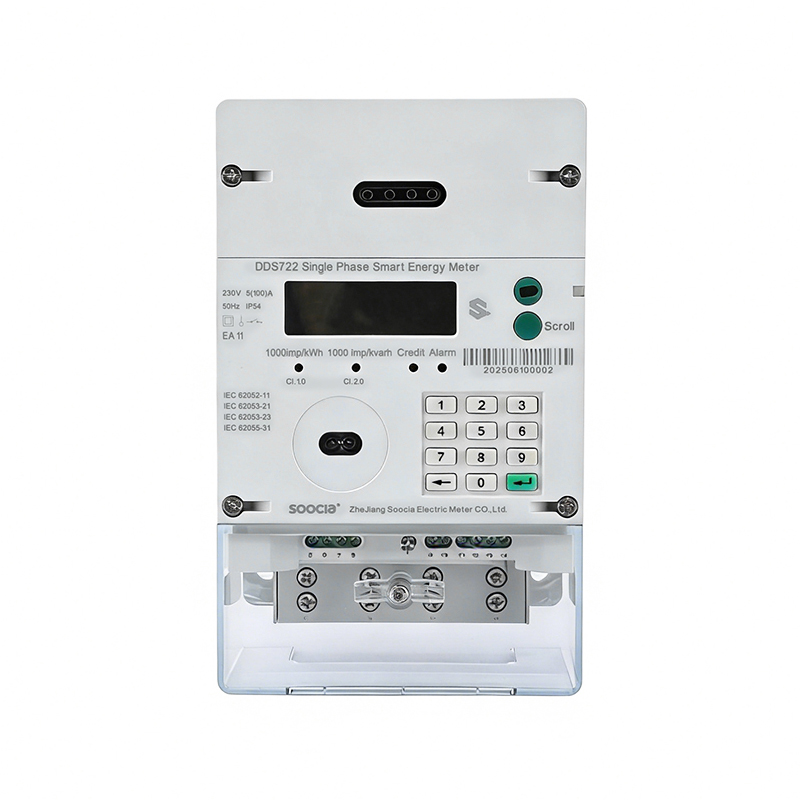
The acronym STS stands for Standard Transfer Specification. It defines a secure method of transferring credit or other information from a point-of-sale system to a meter. That transfer happens through a 20-digit encrypted token—a code you either type into the meter’s keypad, send via SMS, or enter through a mobile app.
What makes STS different from proprietary prepayment systems is the word “open.” Any manufacturer can build an STS-compliant meter, as long as they follow the standard and get certified. That means a utility can buy meters from three different vendors, and all of them will work with the same vending system, the same tokens, and the same customer interface.
An “STS smart meter” today usually refers to an STS-compliant meter that adds two-way communication—cellular, LoRaWAN, NB-IoT, or RF—so the utility can read consumption data remotely and receive alarm notifications, without losing the core prepayment token functionality.
How STS Smart Meters Work and Why They Matter
Let me walk you through the key technical pieces that make STS smart meters different from ordinary prepayment meters.
The 20-Digit Token System
At the heart of STS is the encrypted token. When a customer buys electricity credit—whether at a retail shop, through a mobile money service like M-Pesa, or via a banking app—the vending system generates a unique 20-digit number. That number contains the credit amount, the meter’s unique identifier, and a cryptographic signature that proves the token is genuine.
The customer types those 20 digits into the meter’s keypad. The meter decrypts the token using its own secure chip, verifies the signature, and adds the credit to its internal balance. No physical card. No smart card reader that can break or get lost. Just numbers.
The security mechanism uses a 128-bit encryption algorithm (EA11), which replaced the older EA07 version after an independent security review led by the IEC. That upgrade closed known vulnerabilities and made the system far more resistant to token forgery or replay attacks.
The TID Rollover – A Planned Security Evolution
One feature that confuses people but is actually a strength is the Token Identifier (TID) Rollover. The TID is a counter that ensures every token issued to a specific meter is unique. After a certain number of tokens, the TID reaches its limit and the meter must be updated through a controlled process.
Critics sometimes call this a design flaw. But the STS Association explains it differently: it's a deliberate security safeguard. By forcing periodic cryptographic renewal, STS prevents the meter from operating indefinitely with outdated security parameters. The rollover is planned, documented, and supported by the association’s key management services.
STS Edition 2 – The Smart Upgrade
The original STS standard (sometimes called Edition 1) was designed for standalone prepayment meters with no communication back to the utility. Edition 2, first published in 2018, added state-of-the-art security upgrades and—crucially—the provision for smart meter functionality.
That means an STS Edition 2 meter can operate in standalone mode today, but it's built to connect to a communication network later when the utility is ready. The standard doesn't force a utility to leap from zero to full smart infrastructure overnight. It allows a gradual, budget-friendly transition.
The STS + DLMS Integration
A recent development that industry insiders are watching closely is the liaison agreement between the STS Association and the DLMS User Association (Device Language Message Specification). DLMS/COSEM is the leading global standard for utility data exchange protocols.
The partnership means STS tokens can now be seamlessly transported using the DLMS/COSEM protocol. In plain language: utilities can combine STS prepayment security with advanced data exchange capabilities, without building two separate systems. For a utility that wants prepayment functionality but also needs remote monitoring, this integration is a big deal.
Smart Features vs. Core Prepayment
What makes an STS meter “smart” rather than just “prepaid”? The industry consensus points to three things:
Two way communication – The meter can send consumption data, alarms, and status information back to the utility, not just receive tokens.
Leakage and tamper detection – The meter can identify abnormal usage patterns, bypass attempts, or physical interference, and report them.
Remote configuration – The utility can change tariffs, disconnect or reconnect service, or update parameters without sending a technician.
Not every STS meter has these features. The standard allows manufacturers and utilities to choose what they need. An STS meter with a keypad and no communication module is still STS compliant. An STS meter with a cellular modem and remote disconnect is where the “smart” label fits.
Recommended Products

With over 30 years of experience in electricity metering, we specialize in the design, manufacturing, and supply of energy meters. Our product portfolio covers multiple series, including mechanical, electronic, and smart meters.
Contact Us
+86-577-62711702
Zhejiang Soocia Electric Meter Co., Ltd.:
No.21-23 Shanggong Road, Shangwu Industrial Zone, Liushi Town, Yueqing City, Zhejiang Province, China
Huaxia Power Transmission And Distribution Equipment Co., Ltd.:
No. 222 Weisan Road, Yueqing Economic Development Zone, Yueqing City, Zhejiang Province, China

Industrial & Commercial Power Systems