Quick Product Search

Contact us to learn how we can use our expertise to bring you high-quality products.

Industry News
Home / News / Industry News / PV Grid-Connected Switchgear: Key Safety Features and Protection Solutions

PV Grid-Connected Switchgear: Key Safety Features and Protection Solutions

2026-01-23

A Systematic Approach to Photovoltaic Safety

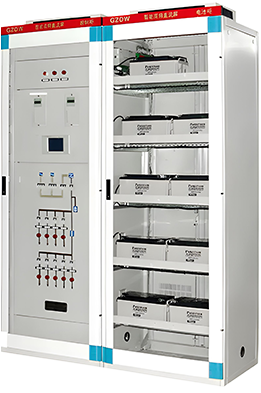
The operational environment of a grid-connected solar installation presents unique electrical safety challenges that combine high-voltage direct current with utility-grade alternating current. Addressing these challenges requires a systematic and layered approach to protection, which is integrated within the PV Grid-connected Switchgear. This article details the essential safety features and protection solutions that define effective switchgear for photovoltaic applications, providing a framework for understanding its critical design considerations.
DC-Side Protection: Addressing the Photovoltaic Specifics

The DC side of a PV system requires specialized protective measures distinct from standard AC applications.

  1. DC Arc Fault Circuit Interruption: This protection is designed to detect the characteristic signature of a series or parallel DC arc, which can pose a fire risk. Specialized relays analyze current and voltage noise to identify an arc and command circuit breakers to open, interrupting the arc.
  2. DC Overcurrent and Short-Circuit Protection: Dedicated DC circuit breakers or fuses with appropriate voltage and current ratings are employed. Their breaking capacity and trip characteristics must be suited for photovoltaic DC circuits, considering factors like available fault current from multiple strings in parallel.
  3. Surge Protective Devices (SPDs): Installed on both DC and AC sides, SPDs divert transient overvoltages from lightning or switching events to ground, protecting sensitive electronic components in inverters and the switchgear itself.
  4. Insulation Monitoring: An Insulation Monitoring Device (IMD) continuously measures the resistance between the DC live conductors and earth. A gradual decline in insulation resistance can signal aging cables, moisture ingress, or damage, allowing for intervention before a full ground fault occurs.

AC-Side and Grid Interconnection Protection

At the point of common coupling with the grid, protection ensures safe interaction.

  1. Anti-Islanding Protection: This is a fundamental grid requirement. It uses passive (monitoring voltage/frequency) and active (injecting small disturbances) methods to detect a grid loss. Upon detection, it commands the main AC circuit breaker to open, ensuring the PV plant does not energize a dead grid.
  2. AC Overcurrent and Short-Circuit Protection: Standard AC circuit breakers protect the cables and equipment on the plant side of the interconnection. Their coordination with utility protection schemes is important.
  3. Automatic Reclosing Management: Following a grid fault that has been cleared, the switchgear may incorporate logic for a safe, delayed reconnection. This allows the grid to stabilize and prevents rapid, repeated connection attempts.

System-Wide Safety and Monitoring Features

Additional features contribute to overall operational safety.

  1. Visual Indication and Metering: Clear voltage presence indicators, current meters, and status LEDs provide operators with immediate local information about the system's state.
  2. Thermal Monitoring: Continuous temperature monitoring of busbars and cable connections can detect hot spots caused by loose terminations, preventing potential thermal damage or fire.
  3. Mechanical Safety and Interlocks: Physical design prevents access to energized parts. Interlocking mechanisms can ensure, for example, that a breaker cannot be racked into service while the cabinet door is open, or that the earthing switch can only be engaged when the main breaker is open.

The Sum of Its Protective Parts

The safety of a PV plant is not defined by a single component but by a cohesive system of integrated protections. The PV Grid-connected Switchgear is the assembly that brings these essential features together—from DC arc detection to grid anti-islanding—into a single, coordinated unit. Evaluating a switchgear solution requires a thorough review of these protection layers, ensuring they are comprehensive, appropriately rated for the specific installation, and work in concert to manage the distinct risks of photovoltaic power generation and grid interconnection.