中文简体
中文简体
 English
 русский

Quick Product Search
Contact us to learn how we can use our expertise to bring you high-quality products.
2026-04-24
STS prepayment electricity meters are available in multiple configurations to meet diverse electricity consumption needs. The single‑phase and three‑phase models are the widely used versions. These two types are deployed in different scenarios based on power demand, system complexity, and installation conditions.
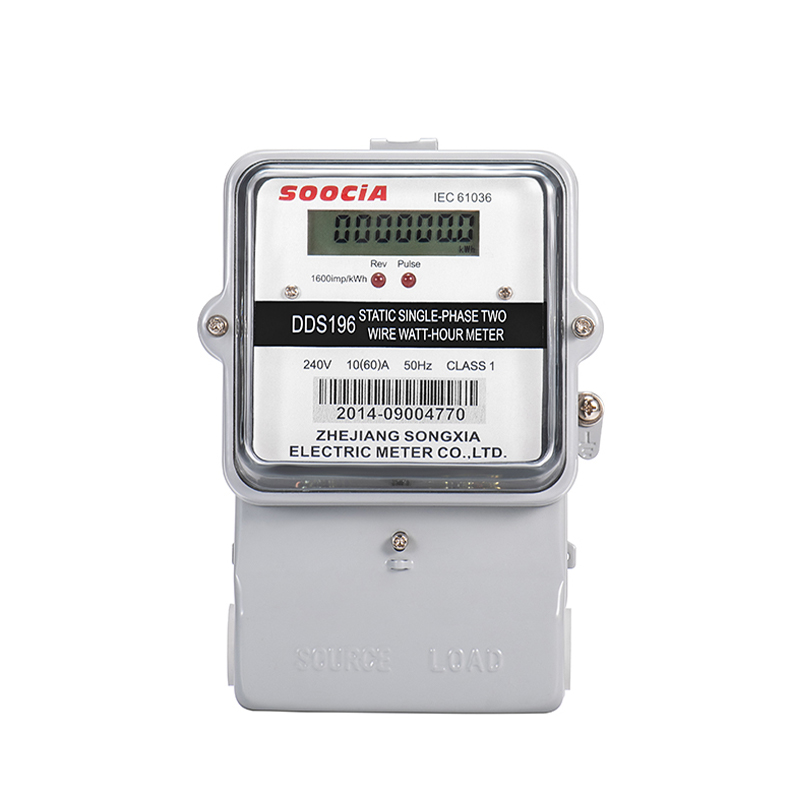
As an IEC 62055‑compliant, token‑based code prepayment solution, STS meters feature unified encryption standards, strong compatibility, and secure 20‑digit token recharge. Understanding the functional differences between single‑phase and three‑phase models is critical for selecting the right metering solution for residential, commercial, or industrial applications.
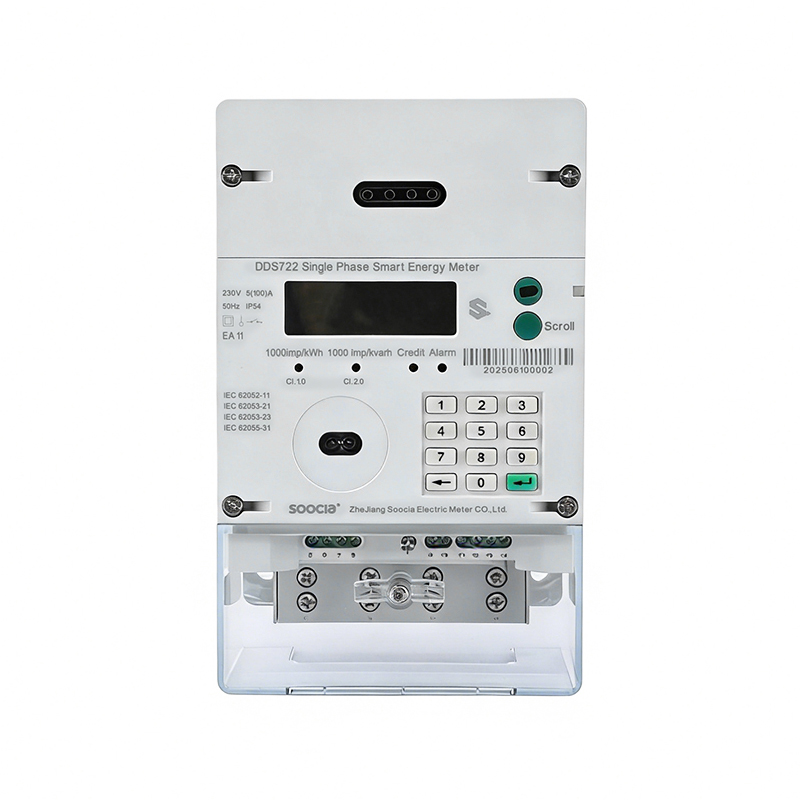
Single‑phase STS meters are mainly used in residential scenarios with moderate power consumption. They are ideal for standard household loads such as lighting, televisions, fans, refrigerators, and other small appliances.
With a simple circuit structure, single‑phase meters can be easily integrated into standard household power systems. They are widely used in houses, apartments, and small‑power sites where the load is stable and low.
These meters support the STS standard 20‑digit token recharge mechanism. Users can manage electricity consumption and control household energy use by entering tokens via the keypad or receiving remote token delivery.
Three‑phase STS meters are designed for high‑power demand scenarios. They are commonly used in commercial buildings, workshops, factories, and industrial sites that require a stable, continuous power supply for heavy equipment.
Unlike single‑phase systems, three‑phase meters distribute power across three phases, enabling them to carry much higher loads and support continuous‑running or high‑power machinery.
They fully comply with the STS standard and use the same token encryption and recharge logic as single‑phase meters, but their load‑carrying capacity and measurement accuracy are significantly enhanced.
The core difference between the two models is load capacity.
Single‑phase meters are for light, stable loads.
Three‑phase meters are designed for high, fluctuating loads.
This difference directly determines their application boundaries. Choosing the right type depends mainly on expected power consumption and the nature of electrical equipment.
Installation requirements also differ noticeably:
Single‑phase meters: Houses, small apartments, rural households, shops, and low‑power sites with moderate electricity use.
Three‑phase meters: Shopping malls, factories, enterprises, farms, public facilities, and large infrastructure with high and continuous power demand.
Selection is closely tied to power scale and equipment type.
Both models support STS‑standard prepaid energy management, but their management focus differs:
Both can be connected to STS‑compliant prepayment systems for unified recharge, parameter setting, balance clearing, and data analysis.
Single‑phase and three‑phase meters belong to the same STS standard ecosystem, complying with IEC 62055 and using the same security module, encryption algorithm, and 20‑digit token mechanism.
This unified architecture ensures consistent recharge processes, system compatibility, and cross‑vendor interoperability. The core operating principle remains unchanged across different power levels and scenarios.
Single‑phase and three‑phase STS prepayment meters play different roles in power distribution systems. Both follow the international STS standard, featuring high security, strong compatibility, and flexible token recharge. They provide reliable, standardized prepayment metering solutions for low‑power residential and high‑power commercial/industrial scenarios, respectively.
Recommended Products

With over 30 years of experience in electricity metering, we specialize in the design, manufacturing, and supply of energy meters. Our product portfolio covers multiple series, including mechanical, electronic, and smart meters.
Contact Us
+86-577-62711702
Zhejiang Soocia Electric Meter Co., Ltd.:
No.21-23 Shanggong Road, Shangwu Industrial Zone, Liushi Town, Yueqing City, Zhejiang Province, China
Huaxia Power Transmission And Distribution Equipment Co., Ltd.:
No. 222 Weisan Road, Yueqing Economic Development Zone, Yueqing City, Zhejiang Province, China

Industrial & Commercial Power Systems