中文简体
中文简体
 English
 русский

Quick Product Search
Contact us to learn how we can use our expertise to bring you high-quality products.
2026-09-18
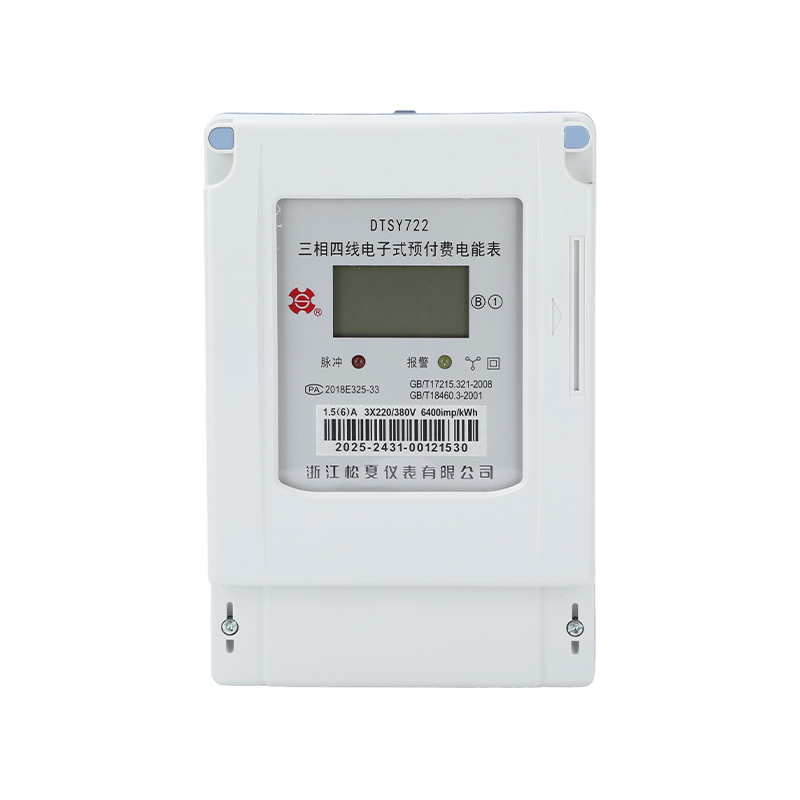
Three-Phase IC Card Prepaid Energy Meter technology is gaining attention as electricity management systems continue to evolve across residential, commercial, and small industrial settings. These meters combine three-phase energy measurement with IC card-based prepaid functions, providing users with a way to monitor consumption while managing energy credit in advance.
Electricity providers and facility managers are exploring digital metering solutions that can support clearer consumption records and more structured payment processes. Compared with traditional meter-reading methods, prepaid energy meters give users more direct and timely access to information about remaining credit and electricity usage.
The three-phase configuration is designed for electrical systems with higher loads or multiple phase conductors, where single-phase metering would be insufficient. This makes the technology suitable for locations where equipment and loads are powered by three-phase networks.
A Three-Phase IC Card Prepaid Energy Meter generally integrates several functions into a single metering unit. Depending on the model and system configuration, common functions may include:
Protection functions such as overvoltage, overcurrent, or reverse-current protection (depending on model)
These functions can help simplify routine electricity management and reduce reliance on manual reading.
Three-phase prepaid meters can be considered for a range of electricity-use environments. Residential buildings with three-phase connections may use them to manage shared electricity costs or tenant billing, while commercial facilities can use them for individual units or designated areas.
Small workshops, rental properties, public facilities, and other locations with three-phase electrical systems may also evaluate prepaid metering based on their operational requirements.
As electricity costs rise and consumption patterns draw greater attention, access to timely energy information has become an important part of daily electricity management. A digital meter can display relevant information without relying entirely on manual meter-reading procedures.
IC card technology also provides a tangible way to add or manage prepaid credit. Depending on the local electricity management system, users may purchase credit through an authorized channel and load it onto the meter using the designated card.
Before selecting a three-phase prepaid energy meter, users generally need to consider the electrical characteristics of the installation. Meter specifications should match the installation's rated voltage, current range, wiring configuration, communication requirements, and applicable local standards.
Proper installation and configuration are also important for accurate measurement and reliable operation. In practical projects, electrical professionals may assess the existing power distribution system before a meter is installed or replaced.
The development of digital electricity infrastructure is creating new opportunities for prepaid and smart metering solutions. Three-phase IC card meters represent one approach that combines electricity measurement with prepaid energy management.
Future product development may focus on clearer data reporting, easier credit management, stronger compatibility with digital energy systems, and additional communication options. As electricity management requirements become more complex, three-phase prepaid metering technology may continue to be evaluated across different types of electrical installations.
Recommended Products

With over 30 years of experience in electricity metering, we specialize in the design, manufacturing, and supply of energy meters. Our product portfolio covers multiple series, including mechanical, electronic, and smart meters.
Contact Us
+86-577-62711702
Zhejiang Soocia Electric Meter Co., Ltd.:
No.21-23 Shanggong Road, Shangwu Industrial Zone, Liushi Town, Yueqing City, Zhejiang Province, China
Huaxia Power Transmission And Distribution Equipment Co., Ltd.:
No. 222 Weisan Road, Yueqing Economic Development Zone, Yueqing City, Zhejiang Province, China

Industrial & Commercial Power Systems