中文简体
中文简体
 English
 русский

Quick Product Search
Contact us to learn how we can use our expertise to bring you high-quality products.
2026-06-05
Introduction: Why Two Major Standards Bodies Finally Aligned
For over three decades, the global metering industry has operated along two distinct and largely parallel tracks. On one side stands the Standard Transfer Specification (STS), a robust prepaid metering framework governed by the STS Association (STSA) and codified under the IEC 62055 series. On the other stands DLMS/COSEM, the comprehensive smart metering data model and communication protocol managed by the DLMS User Association (DLMS UA) and standardized through the IEC 62056 series. These two ecosystems have collectively served over 120 countries across electricity, water, gas, and heat metering. Yet for lot of their histories, they have existed in isolation — technically incompatible, strategically uncoordinated, and, from the perspective of utilities seeking integrated solutions, frustratingly separate.
That dynamic changed fundamentally in January 2026, when the STS Association and the DLMS User Association signed a formal Liaison Agreement. The agreement is not merely a statement of goodwill between two industry bodies. It is a structured framework for technical convergence, roadmap alignment, and joint market education that addresses one of the longest-standing fragmentation challenges in the global metering industry.
For utilities managing mixed fleets of prepaid and smart meters, the agreement promises a future where a single hardware platform can support both STS-based token transactions and DLMS-based advanced metering infrastructure (AMI) — without sacrificing the security, interoperability, or compliance guarantees that either standard provides individually. For manufacturers, it means the elimination of redundant engineering efforts and the ability to design products that serve both prepaid and postpaid markets from a unified architecture. For the broader ecosystem of system integrators, software vendors, and regulators, the agreement signals the beginning of a more coherent, interoperable, and future-proof metering landscape.
This article examines the STS-DLMS Liaison Agreement in detail — its origins, its four core content areas, the key figures driving it forward, and its strategic implications for every stakeholder in the smart metering value chain.
The Liaison Agreement was formally executed in January 2026 following months of preparatory discussions between the leadership of both associations. The timing is significant. Across Africa, Asia, Latin America, and parts of Eastern Europe, utilities are simultaneously deploying prepaid metering systems to improve revenue collection and rolling out smart metering infrastructure to enable demand-side management, grid monitoring, and time-of-use tariffs. These two deployment streams have traditionally required separate procurement processes, separate hardware specifications, and separate data management systems — a duplication that increases costs and limits operational flexibility.
The Liaison Agreement directly addresses this duplication by establishing four pillars of cooperation: technical integration, roadmap synchronization, application expansion, and joint market education. Each pillar is designed to bring the STS and DLMS ecosystems closer together without compromising the integrity or independence of either standard.
Three months after the signing, in April 2026, the two associations jointly convened a seminar in Cape Town, South Africa, titled "Securing the bridge between legacy and smart." The location was deliberately chosen: Sub-Saharan Africa represents one of the largest and fastest-growing markets for prepaid electricity metering, and the region is increasingly moving toward hybrid prepaid-smart metering deployments. Cape Town is also home to a significant concentration of metering technology companies and regional utility headquarters, making it a natural venue for a discussion about the practical implementation of the Liaison Agreement.
The seminar brought together senior leadership from both associations. Key attendees included:
The seminar's theme — "Securing the bridge between legacy and smart" — deliberately avoided framing STS as legacy and DLMS as modern. Instead, it positioned both standards as complementary elements of a comprehensive metering solution. The bridge metaphor captured the essence of the Liaison Agreement: not a replacement of one standard by another, but a secure, well-defined connection between two mature ecosystems.
The technically consequential aspect of the Liaison Agreement is its approach to integrating STS token functionality into the DLMS/COSEM data model. Historically, STS tokens have been transmitted and processed independently of the DLMS data channel. A prepaid electricity meter implementing STS receives encrypted tokens via a physical or electronic interface, decodes them using the STS cryptographic algorithm, and credits the meter's energy balance — all without any involvement from the DLMS communication stack. Conversely, a DLMS-enabled smart meter reads and writes data through the COSEM object model, communicates via DLMS Application Layer protocols, and manages its state through DLMS-defined attributes and methods.
The Liaison Agreement bridges these two worlds through the use of Generic Companion Profiles within the DLMS/COSEM framework. Companion Profiles are a well-established mechanism in DLMS for extending the standard's data model to accommodate application-specific requirements. A Generic Companion Profile provides a standardized container within the COSEM object model that can carry application-specific data payloads while maintaining full DLMS interoperability.
Under the Liaison Agreement, STS credit tokens can be encapsulated as payloads within Generic Companion Profiles and transmitted through the DLMS communication channel. This means that a single DLMS connection can simultaneously carry smart metering data (reads, events, load profiles) and STS token transactions (credit purchases, key changes, tariff updates). The meter processes each payload according to its own protocol — DLMS data through the COSEM object model, STS tokens through the STS decoder — without either system interfering with the other.
The Non-Replacement Principle
Critically, this integration operates on a **non-replacement principle**. The Liaison Agreement does not seek to subsume STS into DLMS or to replace STS functionality with equivalent DLMS mechanisms. STS retains its independent cryptographic infrastructure, its key management hierarchy, its certification program, and its governance structure. DLMS retains its comprehensive data model, its communication protocol stack, and its interoperability testing regime.
This principle is essential for several reasons. First, it preserves the existing installed base of over 100 million STS-compliant meters worldwide — meters that will continue to operate under STS for their full service lives. Second, it respects the regulatory frameworks in jurisdictions where STS compliance is mandated for prepaid electricity metering. Third, it avoids the risks inherent in attempting to merge two mature, independently governed technical standards — risks that include scope creep, governance conflicts, and backward-compatibility failures.
From a technical standpoint, the non-replacement principle translates to a layered architecture where STS and DLMS coexist as peer protocols. The meter's communication interface handles DLMS connections, and within those connections, STS-specific payloads are identified by their Companion Profile designations and routed to the STS processing engine. This architecture is analogous to how application-layer protocols coexist within a TCP/IP stack — each serves its own purpose, shares the transport infrastructure, and operates independently.
What This Means for Product Engineering
For meter manufacturers, the Generic Companion Profile approach has immediate practical implications. A dual-standard meter — one that supports both STS token transactions and DLMS/COSEM communication — can be built on a single hardware platform with a single communication interface. The firmware architecture separates the STS and DLMS processing engines, using a thin middleware layer to route payloads between the communication stack and the appropriate processing engine. This eliminates the need for separate prepaid and smart meter product lines, reducing bill-of-materials costs, simplifying manufacturing logistics, and enabling manufacturers to serve both prepaid and postpaid markets with a single product family.
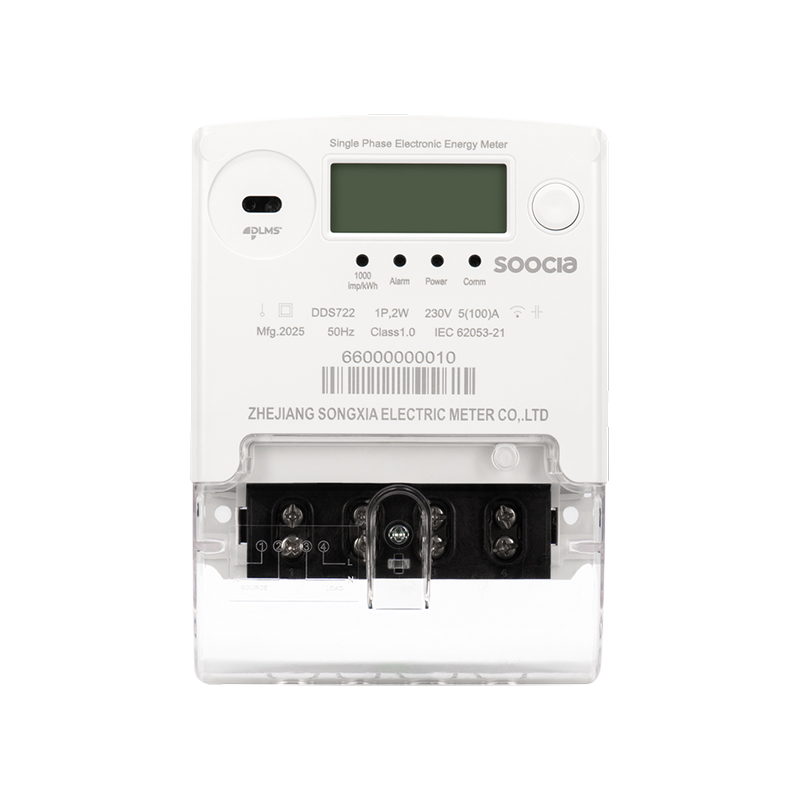
SOOCIA (Zhejiang Songxia Instruments Co., Ltd.) provides a concrete example of this dual-standard approach. As a member of both the STS Association and the DLMS User Association, SOOCIA has developed its DDS722 and DTS722 series meters to comply with both STS and DLMS standards. These products demonstrate that dual-standard compliance is not merely theoretical — it is commercially viable and increasingly expected by utilities that operate mixed-technology deployments.
The second pillar of the Liaison Agreement addresses the long-term coordination of technical development roadmaps between the two associations. In the absence of coordination, the risk of divergent evolution is real: STS could introduce features that create incompatibilities with DLMS communication environments, or DLMS could modify its data model in ways that complicate the carriage of STS payloads. Either outcome would undermine the technical integration achieved through the Generic Companion Profile approach.
Under the Liaison Agreement, both associations have committed to sharing their development roadmaps on a regular basis and coordinating release schedules where dependencies exist. This does not mean that STS and DLMS will release features in lockstep — the two standards serve different primary functions and have different governance cycles. Instead, it means that when one association plans a change that affects the other's ecosystem, it will provide advance notice and, where appropriate, involve the other association in the technical review process.
Practical Implications for Utilities and Manufacturers
For utilities, roadmap synchronization provides greater confidence in long-term procurement decisions. A utility planning a 10-year meter replacement program can now design its specifications with the expectation that STS and DLMS capabilities will remain interoperable throughout the deployment cycle. This reduces the risk of stranded assets and expensive mid-program specification changes.
For manufacturers, synchronized roadmaps mean that product development investments are protected. When a manufacturer designs a dual-standard meter, it needs assurance that both the STS and DLMS specifications will continue to support the integration architecture for the product's expected service life — typically 10 to 15 years. The Liaison Agreement's roadmap synchronization commitment provides that assurance, reducing the uncertainty that has historically made some manufacturers hesitant to invest in dual-standard product lines.
The third pillar of the Liaison Agreement opens new market opportunities by extending the combined STS-DLMS framework beyond electricity metering to water, gas, heat, and time-based metering applications.
STS was originally designed for prepaid electricity metering, and electricity remains its dominant application. However, the underlying technology — secure token generation, encrypted transmission, decentralized credit management — is applicable to any utility service where prepaid consumption models are desirable. Water utilities in water-scarce regions, gas utilities in emerging markets, and district heating operators in Northern Europe and Central Asia all face the same fundamental challenge: how to manage consumption and revenue collection when postpaid billing is impractical or when consumers prefer pay-as-you-go models.
DLMS, with its comprehensive multi-utility support, already provides the data model and communication infrastructure for water, gas, and heat metering. The COSEM object model includes specialized interface classes for different utility types, and DLMS companion profiles for water and gas metering are already well established. What has been missing is a prepaid transaction layer for these non-electricity applications — precisely the capability that STS provides.
The Market Opportunity
The combination of STS prepaid token technology with DLMS multi-utility communication creates a compelling proposition for non-electricity utilities. Consider a water utility in a developing-market city that currently relies on estimated billing and faces significant non-revenue water losses. Deploying prepaid water meters with STS token technology would enable exact consumption-based billing and upfront revenue collection. Using DLMS as the communication backbone would allow the utility to simultaneously collect consumption data, detect leaks, monitor pressure, and manage tariffs — capabilities that go well beyond what a standalone prepaid system can provide.
The market for such multi-utility prepaid deployments is substantial and growing. Industry analyses suggest that the global water metering market alone will exceed $8 billion by 2030, with a significant portion of deployments in regions where prepaid models are preferred or required. Gas and heat metering represent additional addressable markets, particularly in Europe, Central Asia, and parts of Latin America. The STS-DLMS Liaison Agreement positions both standards to capture a share of these markets that neither could address independently.
The fourth pillar of the Liaison Agreement focuses on jointly educating the market about the benefits of STS-DLMS convergence. This is a necessary complement to the technical work. Despite the clear advantages of dual-standard metering solutions, many utilities, regulators, and system integrators remain unaware of the integration possibilities or harbor misconceptions about the relationship between STS and DLMS.
Common misconceptions include the belief that STS is a legacy technology destined for replacement by DLMS, that DLMS cannot support prepaid functionality, or that dual-standard meters are prohibitively expensive and technically complex. These misconceptions are not merely inaccurate — they actively impede the adoption of integrated solutions and delay the realization of the benefits that the Liaison Agreement promises.
The Joint Education Program
Under the Liaison Agreement, the STS Association and the DLMS User Association are collaborating on the development of joint technical documentation, white papers, and educational materials. These resources are designed to serve multiple audiences:
The Cape Town seminar in April 2026 was the first public manifestation of this education program. Additional seminars, webinars, and technical workshops are planned throughout 2026 and beyond, targeting key geographic markets where the demand for integrated prepaid-smart metering solutions is strongest.
Industry Significance: What This Means for the Metering Ecosystem
The STS-DLMS Liaison Agreement is significant not only for what it accomplishes technically, but for what it represents structurally. It is the first formal, sustained cooperation between the two dominant standards bodies in the global metering industry. As such, it sets a precedent for how technical standards organizations can work together to address market fragmentation without sacrificing their individual missions or governance independence.
For Utilities
Utilities are the primary beneficiaries of the Liaison Agreement. The ability to deploy meters that support both STS prepaid transactions and DLMS smart metering functionality on a single hardware platform fundamentally changes the metering procurement equation. Utilities no longer need to choose between prepaid revenue assurance and smart metering analytics — they can have both. This is particularly valuable in markets where the customer base includes a mix of prepaid and postpaid consumers, or where a utility is transitioning from a predominantly prepaid model to a hybrid prepaid-postpaid model.
For Manufacturers
Meter manufacturers benefit from the elimination of redundant product development efforts. Dual-standard compliance — once a niche capability offered by a small number of specialized manufacturers — is rapidly becoming a market expectation. The Liaison Agreement provides the technical framework and the roadmap stability that manufacturers need to invest confidently in dual-standard product development. It also creates opportunities for differentiation: manufacturers that can offer the deepest integration of STS and DLMS capabilities, with the efficient firmware architecture and the broadest communication interface support, will have a competitive advantage in an increasingly standards-conscious market.
For the Broader Ecosystem
System integrators, software vendors, and cybersecurity specialists all stand to benefit from a more coherent metering technology landscape. When meters communicate through a single protocol (DLMS) while supporting multiple application layers (STS tokens, COSEM data objects), the head-end systems and data management platforms that serve these meters become simpler to design, deploy, and maintain. Cybersecurity assessments become more straightforward when the communication channel is unified, even if the application layers use different security mechanisms.
The Role of Dual-Member Companies: The SOOCIA Example
A small but growing number of meter manufacturers hold membership in both the STS Association and the DLMS User Association. These dual-member companies are uniquely positioned to translate the Liaison Agreement from a standards-body commitment into commercially available products. Their membership in both associations gives them early access to technical developments, participation in interoperability testing programs, and input into the specification processes of both standards.
SOOCIA (Zhejiang songxia electric meter Co., Ltd.) is one such dual-member company. Its DDS722 and DTS722 series meters are certified under both STS and DLMS standards, reflecting a product strategy that anticipates the convergence that the Liaison Agreement formalizes. The DDS722 is a single-phase prepaid smart meter, while the DTS722 is a three-phase variant — both designed for markets where utilities need prepaid revenue assurance and smart metering capabilities on the same device. SOOCIA's dual membership and dual-standard product line illustrate the commercial viability of the integrated approach that the Liaison Agreement promotes.

Looking Ahead: Challenges and Opportunities
The Liaison Agreement is a beginning, not a conclusion. Several challenges remain on the path to full STS-DLMS convergence:
Implementation complexity: The Generic Companion Profile approach is technically sound, but its practical implementation requires careful coordination between firmware engineers, key management system operators, and head-end system developers. Interoperability testing will be essential to ensure that STS payloads carried over DLMS channels are processed correctly across different manufacturers' meters and systems.
Regulatory alignment: In jurisdictions where STS compliance is legally mandated for prepaid electricity metering, regulators will need to update their frameworks to recognize dual-standard meters as compliant. Similarly, regulators who have standardized on DLMS for smart metering deployments will need to acknowledge that STS-based prepaid functionality is a legitimate extension of the DLMS ecosystem.
Market education: The success of the Liaison Agreement depends in large part on whether utilities, regulators, and procurement agencies understand and embrace the convergence model. The joint education program is a necessary investment, but its effectiveness will take time to materialize.
Despite these challenges, the trajectory is clear. The metering industry is moving toward integration, and the STS-DLMS Liaison Agreement provides the institutional and technical framework to make that integration happen in a structured, standards-compliant manner. For every stakeholder in the smart metering value chain — from utility CTOs planning next-generation deployments to firmware engineers designing dual-standard meters — the agreement represents an opportunity to build more capable, more flexible, and more efficient metering systems.
The January 2026 STS-DLMS Liaison Agreement marks a pivotal moment in the evolution of global metering standards. By establishing a formal framework for technical integration, roadmap synchronization, application expansion, and joint market education, the STS Association and the DLMS User Association have addressed one of the industry's persistent structural challenges: the fragmentation between prepaid and smart metering ecosystems.
The agreement's significance extends beyond its immediate technical provisions. It demonstrates that competing standards bodies can collaborate effectively when the market demands convergence — and that such collaboration can produce outcomes that benefit all stakeholders without diminishing the individual standards' integrity or independence.
As utilities worldwide continue to deploy increasingly sophisticated metering infrastructure, the ability to combine STS's proven prepaid transaction security with DLMS's comprehensive smart metering capabilities will become a decisive factor in technology selection. The Liaison Agreement ensures that this combination is not only possible but supported by the institutional backing of both standards communities — a development that reshapes the competitive landscape and sets the direction for the next decade of metering technology evolution.
Recommended Products

With over 30 years of experience in electricity metering, we specialize in the design, manufacturing, and supply of energy meters. Our product portfolio covers multiple series, including mechanical, electronic, and smart meters.
Contact Us
+86-577-62711702
Zhejiang Soocia Electric Meter Co., Ltd.:
No.21-23 Shanggong Road, Shangwu Industrial Zone, Liushi Town, Yueqing City, Zhejiang Province, China
Huaxia Power Transmission And Distribution Equipment Co., Ltd.:
No. 222 Weisan Road, Yueqing Economic Development Zone, Yueqing City, Zhejiang Province, China

Industrial & Commercial Power Systems