中文简体
 English
 русский

Quick Product Search
Contact us to learn how we can use our expertise to bring you high-quality products.
2026-11-13
The IEC STS Meter Factory plays an important role in supporting the development of modern prepaid electricity metering solutions. As demand for flexible electricity management continues to grow, manufacturing facilities are focusing on production efficiency, product consistency, and compliance with international standards. IEC STS-compliant meters are designed to support secure prepaid electricity management, providing practical solutions for utilities, energy distributors, and electricity service providers.
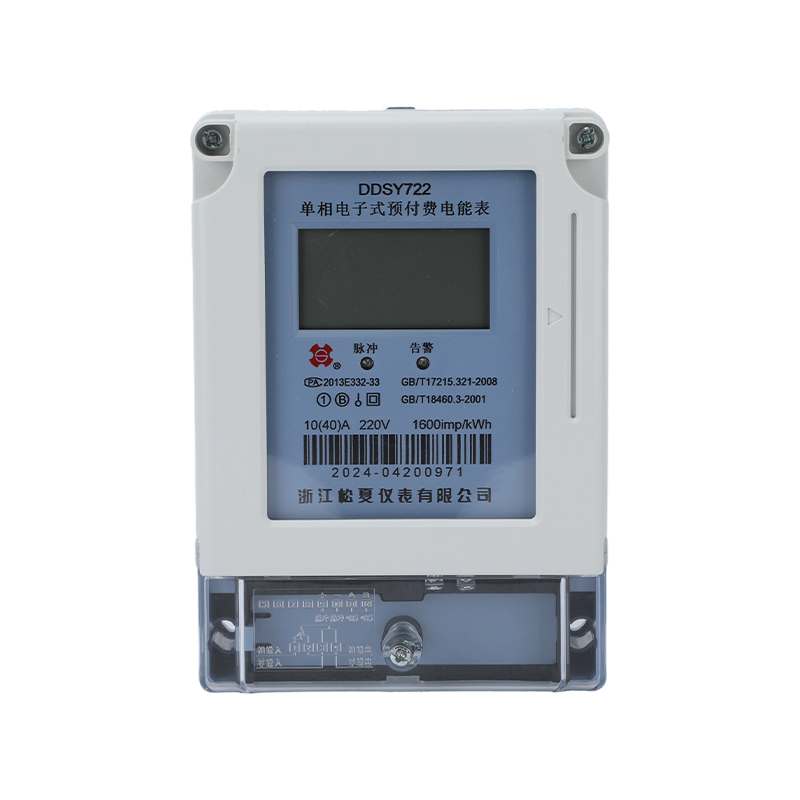
Prepaid electricity systems are gaining attention in different markets as utilities seek more flexible approaches to electricity consumption management. IEC STS technology provides a standardized framework for token-based electricity vending, allowing users to recharge their meters through authorized channels.
This development has encouraged manufacturers to improve production processes and expand their capabilities in areas such as:
· Prepaid meter assembly and functional testing
· STS token management and communication compatibility
· Product quality inspection and performance verification
These processes help ensure that meters meet the technical requirements of their intended applications.
A modern IEC STS Meter Factory generally involves several production stages, from component preparation to final product inspection. Each stage requires appropriate equipment, technical procedures, and quality control measures.
Production activities may include electronic component installation, circuit board assembly, meter enclosure integration, software configuration, and functional testing.
The table below summarizes the main production stages and the quality control focus at each stage.
|
Production Stage |
Key Activities |
Quality Control Focus |
|
Component preparation |
Incoming inspection, component sorting, traceability recording |
Component authenticity, specification matching, supplier verification |
|
Circuit board assembly |
SMT placement, soldering, visual inspection |
Solder joint quality, component alignment, electrical continuity |
|
Meter enclosure integration |
Housing assembly, sealing, terminal installation |
Mechanical fit, ingress protection, terminal tightness |
|
Software configuration |
Firmware loading, parameter setting, STS key injection |
Token security, parameter accuracy, firmware version control |
|
Calibration |
Accuracy adjustment, reference meter comparison |
Measurement accuracy within tolerance, repeatability |
|
Functional testing |
Prepaid functions, display, communication, token acceptance |
Token validation, prepaid logic, communication stability |
|
Final product inspection |
Full-function verification, safety checks, packaging |
Compliance with specifications, safety requirements, shipment readiness |
Quality management also focuses on two important aspects:
· Electrical performance: Checking measurement accuracy, operating stability, and basic electrical safety.
· Functional compatibility: Verifying token acceptance, prepaid functions, display operation, and communication performance.
Through standardized inspection procedures, manufacturers can maintain consistent product specifications across different production batches.
The development of smart metering technology is influencing how electricity meters are designed and manufactured. Manufacturers are paying attention to hardware integration, software functionality, and communication capabilities.
For IEC STS prepaid meters, technological development may involve improved user interfaces, flexible communication options, and more convenient meter management functions.
These improvements can support utilities in monitoring electricity usage, managing prepaid accounts, and organizing meter-related services. At the same time, manufacturing teams need to consider compatibility with existing electricity infrastructure and local technical requirements.
Compliance with IEC STS requirements is an important consideration in prepaid electricity meter manufacturing. The Standard Transfer Specification (STS) establishes a common framework for secure prepaid electricity transactions.
Manufacturers need to pay attention to relevant technical specifications, testing procedures, and certification requirements in their target markets.
In addition to STS-related requirements, product evaluation may cover electrical safety, measurement performance, environmental adaptability, and applicable national regulations.
The table below outlines the main compliance areas and their typical evaluation focus.
|
Compliance Area |
What It Covers |
Typical Evaluation Focus |
|
STS token security |
Token generation, encryption, key management |
Secure token validation and compatibility with vending systems |
|
Measurement performance |
Accuracy class, calibration, repeatability |
Compliance with applicable metering accuracy standards |
|
Electrical safety |
Insulation, dielectric strength, protection against electric shock |
Conformity with relevant safety standards for metering equipment |
|
Environmental adaptability |
Temperature range, humidity, ingress protection |
Suitability for the intended installation environment |
|
National regulations |
Local certification, labeling, grid connection rules |
Market access and procurement acceptance |
A structured compliance process helps ensure that products are suitable for their intended markets and operating conditions.
As electricity distribution systems continue to develop, demand for prepaid metering products is expected to remain an important part of the smart energy market. Manufacturing facilities may continue to invest in production automation, testing equipment, and technical development.
The combination of standardized prepaid technology and improved manufacturing processes can contribute to more efficient electricity management.
For utilities and energy service providers, understanding production capabilities, technical specifications, and compliance requirements will remain essential when evaluating IEC STS prepaid meter solutions.
Recommended Products

With over 30 years of experience in electricity metering, we specialize in the design, manufacturing, and supply of energy meters. Our product portfolio covers multiple series, including mechanical, electronic, and smart meters.
Contact Us
+86-577-62711702
Zhejiang Soocia Electric Meter Co., Ltd.:
No.21-23 Shanggong Road, Shangwu Industrial Zone, Liushi Town, Yueqing City, Zhejiang Province, China
Huaxia Power Transmission And Distribution Equipment Co., Ltd.:
No. 222 Weisan Road, Yueqing Economic Development Zone, Yueqing City, Zhejiang Province, China

Industrial & Commercial Power Systems