中文简体
中文简体
 English
 русский

Quick Product Search
Contact us to learn how we can use our expertise to bring you high-quality products.
2026-07-31
If you're buying energy meters for anything involving money, you need to know what MID means. MID is the Measuring Instruments Directive—a European standard that says if you're using a meter to bill someone, report to regulators, or prove compliance, that meter has to meet specific accuracy requirements. Without MID certification, the data you collect isn't legally defensible. And if you're sourcing from an MID certified energy meter manufacturer, you're already ahead of buyers who don't know what to look for.
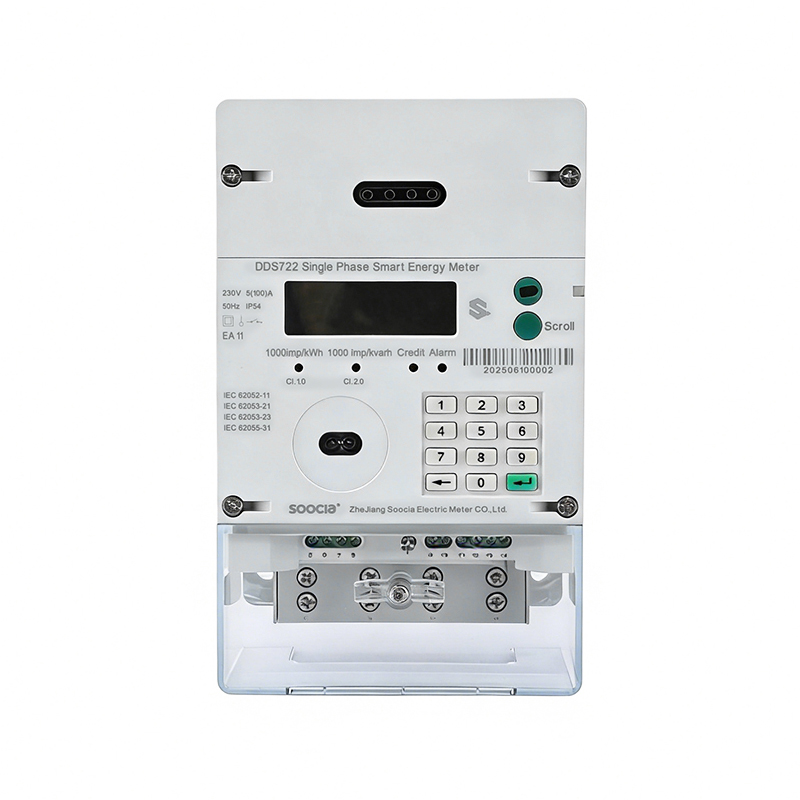
It's a legal requirement, not a marketing label
An MID certified energy meter is one that's been tested and verified to deliver accurate, repeatable measurements. The tests are done by an independent notified body, not just the factory itself. The meter has to pass accuracy tests at multiple load points, survive electromagnetic interference checks, and hold its accuracy across temperature and humidity changes. A legitimate MID certified energy meter manufacturer can provide the certificate showing the notified body, test date, and standards met.
It covers accuracy classes for different applications
MID certification isn't one-size-fits-all. Class A is for basic monitoring. Class B (1% accuracy) is what most billing applications require. Class C (0.5% accuracy) is for higher-precision needs. If you're dealing with an MID certified energy meter manufacturer, they should be able to explain which class you need and why.
Billing and submetering
If you're charging tenants or customers for electricity, you need an MID certified energy meter. In the EU and many other markets, using a non-certified meter for billing is a regulatory violation. The data isn't legally defensible. That means disputes you can't resolve, fines from regulators, or legal action from customers who question their bills. Not worth the risk.
EV charging, solar feed-in, and industrial monitoring
Public EV chargers measure energy delivered and charge per kWh. That meter has to be MID certified—it's a compliance requirement in most European markets. Same goes for solar feed-in: when you're exporting energy to the grid and getting paid for it, the meter needs to be MID certified. Otherwise the utility can reject your data. For industrial monitoring, MID isn't always mandatory, but many facilities choose certified meters anyway because disputes about energy savings are easier to settle when the numbers come from a certified device.
Check the mark, the class, and the certificate
Not every meter that claims to be "MID compliant" actually is. Look for the MID mark on the meter itself—front label or side. If it's not there, it's not certified. Check the accuracy class: Class B or C for billing, Class A for monitoring only. And ask for the certificate. A legitimate supplier can provide it, showing the notified body that did the testing and the standards met. If you're sourcing from an MID certified energy meter manufacturer, this documentation should be readily available.
Verify the installation type
Some meters are MID certified only for specific installation conditions—direct connection up to a certain current, or CT connection. The meter needs to match how you plan to install it. Don't assume the certification covers every use case. Check first.
If you're sourcing from an MID certified energy meter manufacturer, here's what to check:
If your meter is used for billing, regulatory reporting, or any application where numbers need to be trusted, don't buy uncertified equipment. An MID certified energy meter isn't more expensive than a non-certified meter. But it gives you data you can actually use. A non-certified meter is a liability waiting to happen.
MID certified energy meters are about one thing: accuracy you can rely on, and data that stands up to scrutiny. If you're buying from an MID certified energy meter manufacturer, you're getting equipment that meets international standards. If you're not, you're taking a risk that doesn't make sense. SOOCIA offers MID certified energy meter solutions backed by notified body testing and full compliance documentation. Our manufacturing processes are aligned with MID requirements, and we work with buyers to ensure the meters they receive meet the certification standards their applications demand. If you're planning your next energy meter order and need a partner who understands compliance from design through delivery, talk to SOOCIA. We know the standards. We know the process. We're ready when you are.
Recommended Products

With over 30 years of experience in electricity metering, we specialize in the design, manufacturing, and supply of energy meters. Our product portfolio covers multiple series, including mechanical, electronic, and smart meters.
Contact Us
+86-577-62711702
Zhejiang Soocia Electric Meter Co., Ltd.:
No.21-23 Shanggong Road, Shangwu Industrial Zone, Liushi Town, Yueqing City, Zhejiang Province, China
Huaxia Power Transmission And Distribution Equipment Co., Ltd.:
No. 222 Weisan Road, Yueqing Economic Development Zone, Yueqing City, Zhejiang Province, China

Industrial & Commercial Power Systems